HEAT
It warms as it sets
NSEAD says setting plaster can reach 60 °C, and prolonged contact can damage skin at temperatures as low as 45 °C.
See the numbers doodlecasting
WHAT THE GUIDANCE SAYS
Plaster of Paris warms up as it sets.
That gentle heat is a chemical reaction, and in a thick mass it can reach about 60 °C. UK art and design safety guidance comes back to a few habits: cold water, thin layers, a mould for anything awkward, and never a hand in a bucket.
KEEP IT COOL and keep it thin
Check a projectTHE SHORT ANSWER
The heat is part of the chemistry.
Safe casting is about controlling it.
HEAT
NSEAD says setting plaster can reach 60 °C, and prolonged contact can damage skin at temperatures as low as 45 °C.
See the numbersMOULDS
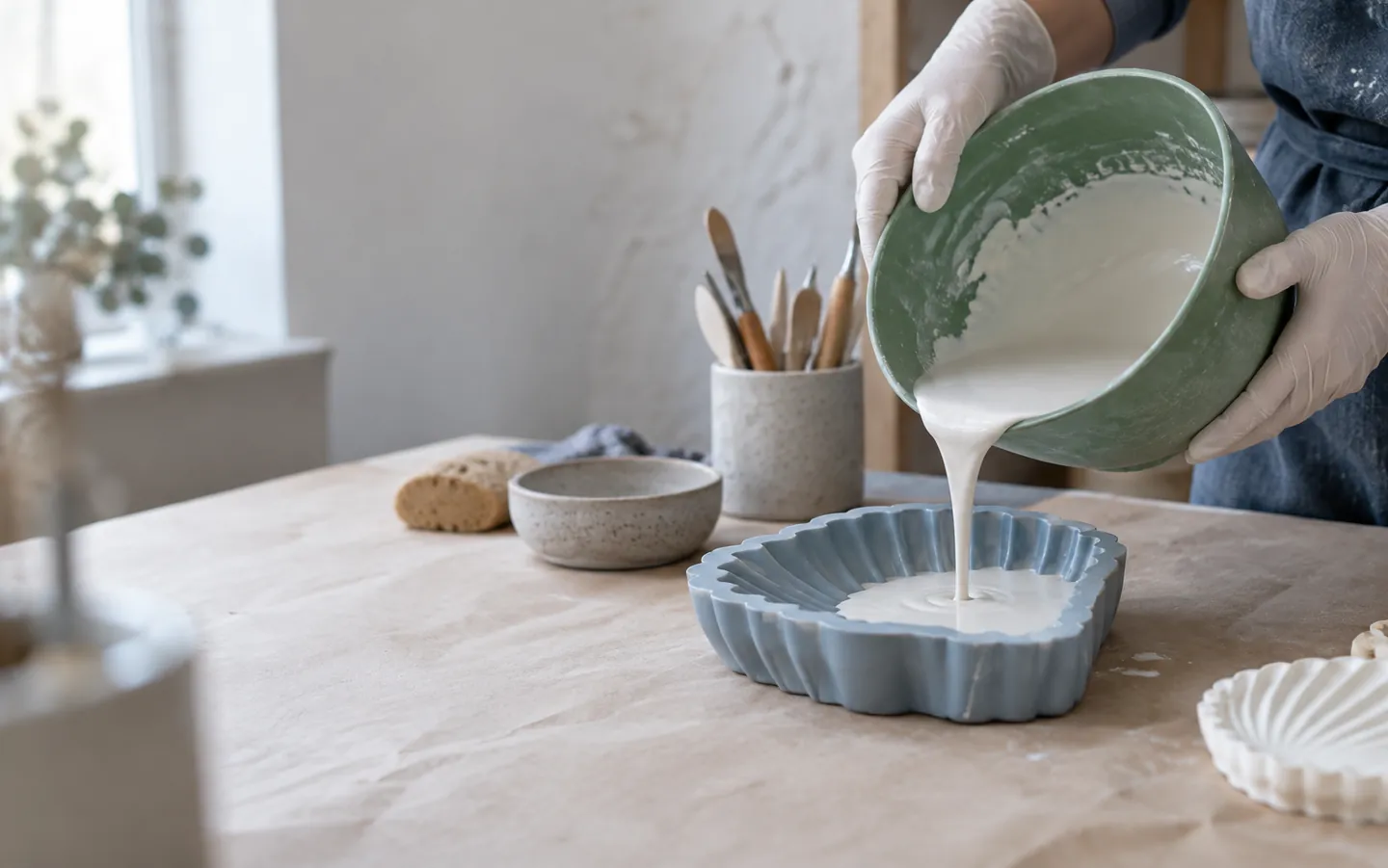
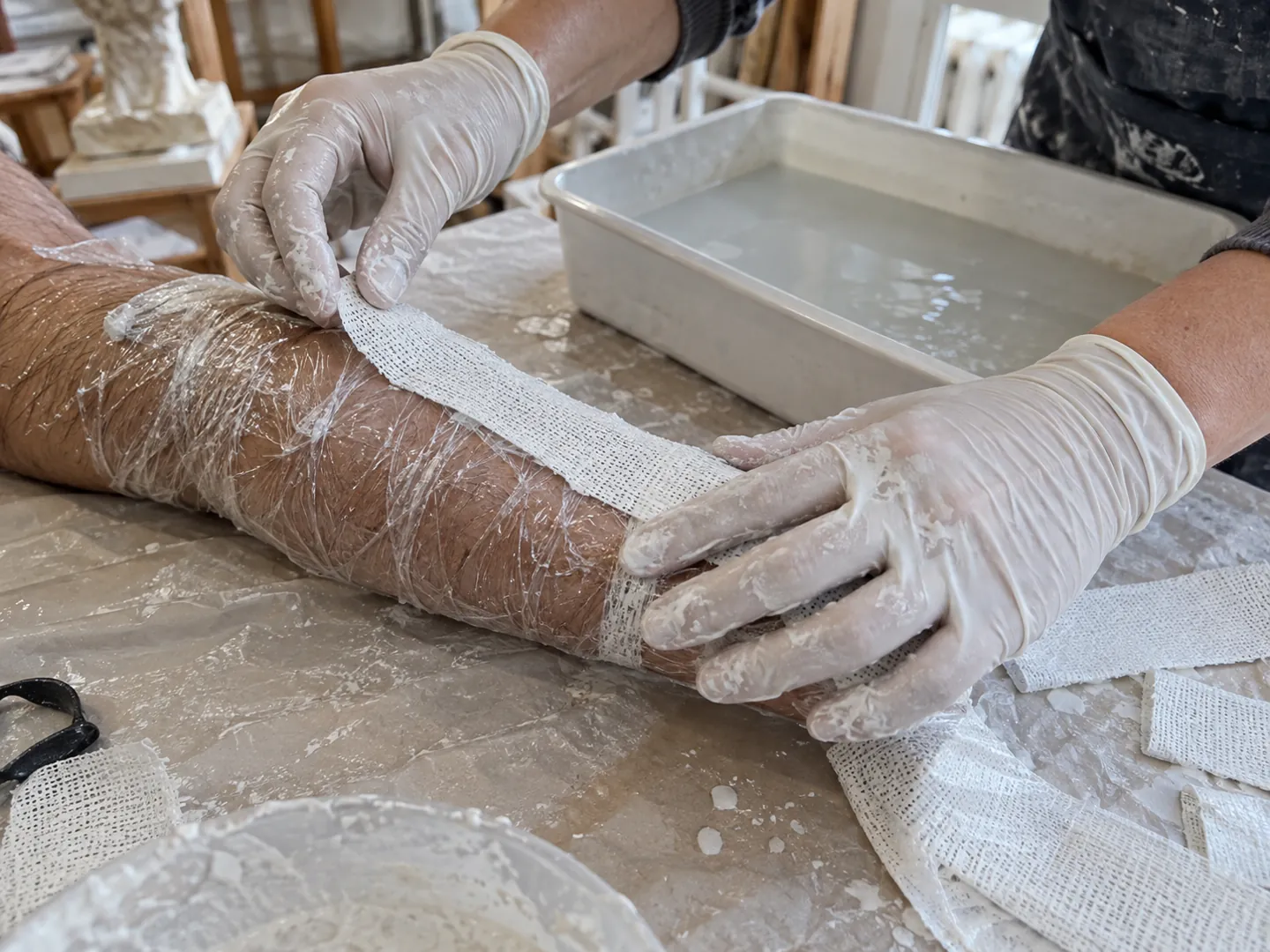
For an impression of an object or body part, NSEAD calls an alginate or clay press mould the safest method. Plaster is then poured into the mould.
Check a projectCLEAN-UP
Wet plaster poured down a sink will set and block it. NSEAD advises bagging plaster scraps and damping dust before you sweep.
How to do it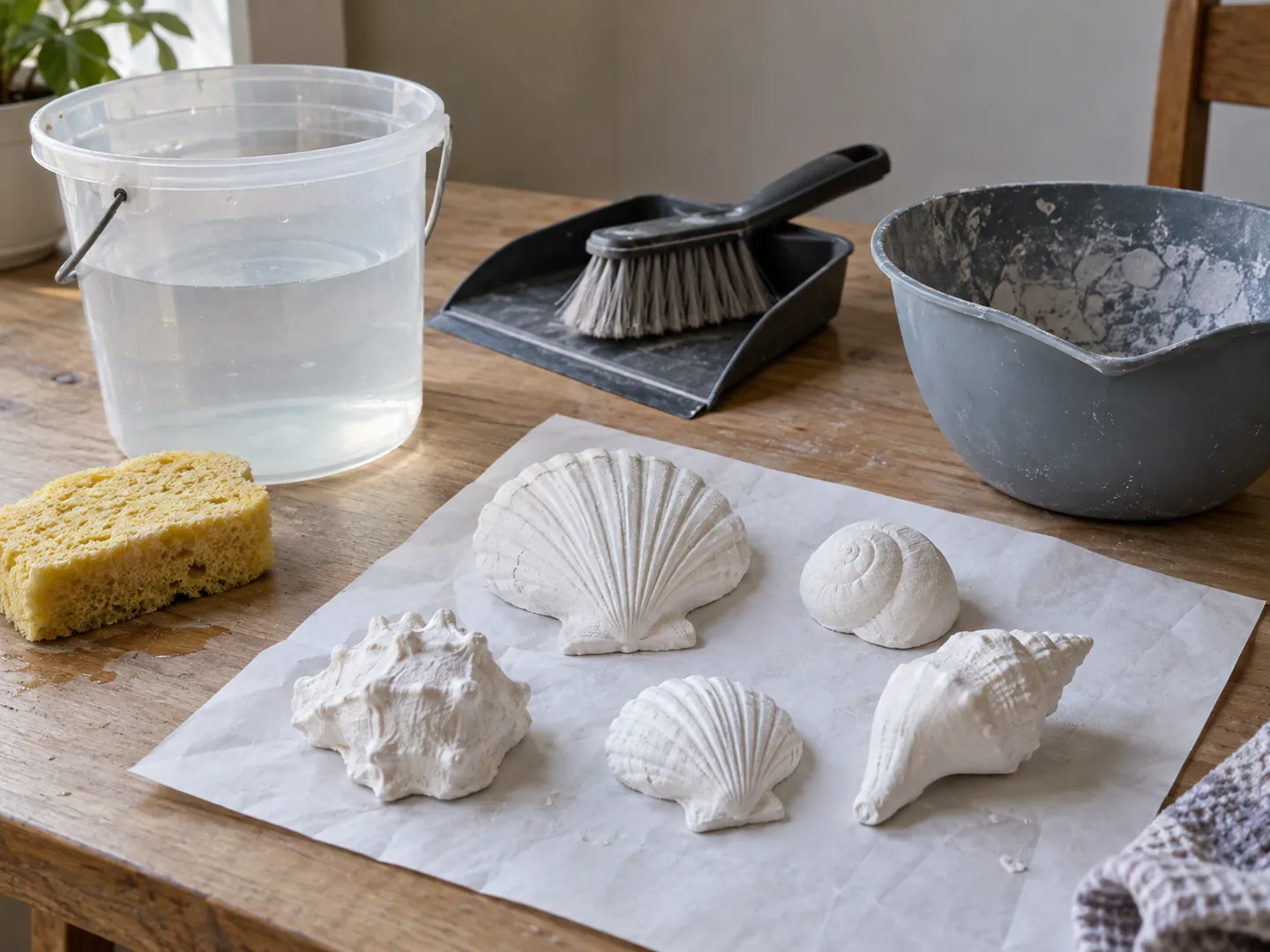
HOW TO DO IT
School guidance is written for classrooms, but the same habits make sense on a kitchen table: plan the mould, mix small amounts, keep things cold and clear up properly.
NSEAD says always add the powder to cold water, never water onto powder. Cold water gives you enough working time.
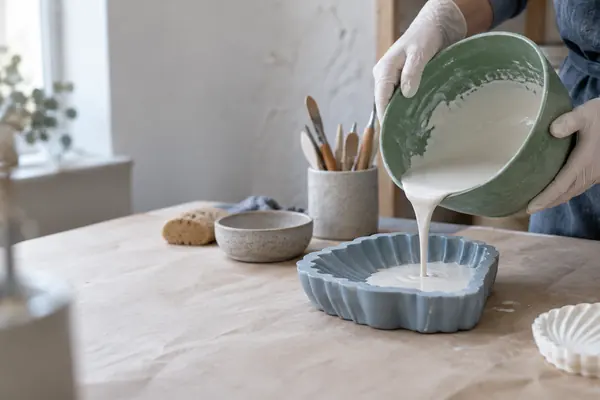
Small volumes are safer and cleaner. Mix in a flexible container so set plaster can be popped out afterwards.
The guidance advises goggles, gloves, and a dust mask when mixing dry powder indoors. Rinse splashes off with cold water.
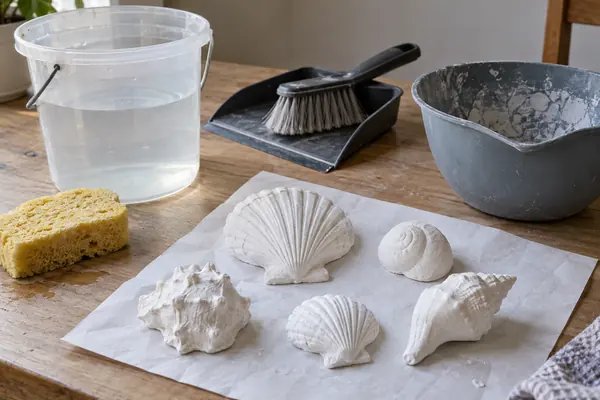
Lightly spray plaster and newspaper with water to keep dust down, bag the fragments and never pour wet plaster down a drain.
TWO NUMBERS WORTH KNOWING
How hot setting plaster can get,
and how little heat it takes to harm skin.
60°C
Temperature setting plaster can reach
On contact with water, plaster of Paris hardens and then slowly becomes hot. NSEAD says temperatures as high as 60 °C can be reached.
SETTING HEAT · NSEAD
45°C
Where prolonged contact can damage skin
Skin damage can happen at much lower temperatures than the peak, perhaps as low as 45 °C, if contact is prolonged.
SKIN · NSEAD
Source: NSEAD (National Society for Education in Art and Design), Plaster of Paris health and safety guidance.
A QUICK PROJECT CHECK
Pick a plaster project to see what UK art and science teaching guidance says about it. The bar shows how much risk the guidance attaches to it.
Based on NSEAD health and safety guidance on plaster of Paris and a Royal Society of Chemistry practical sheet. General information, not a risk assessment.
WHY IT GETS HOT
Plaster of Paris starts as gypsum, a calcium sulfate mineral with water locked into its crystals. The RSC explains that gently heating gypsum drives some of that water off, leaving a white powder.
Add water and it recombines with the calcium sulfate, which is why the mix sets hard and warms up: an exothermic reaction. A lab study of plaster bandage casts found warmer dip water and thicker layers both pushed the peak temperature higher.
Questions
When water is added to the powder it recombines with the calcium sulfate. The RSC describes this as an exothermic chemical reaction, so the mixture gets hot as it sets.
NSEAD says temperatures as high as 60 °C can be reached, and that skin damage can occur at much lower temperatures, perhaps as low as 45 °C, if contact is prolonged.
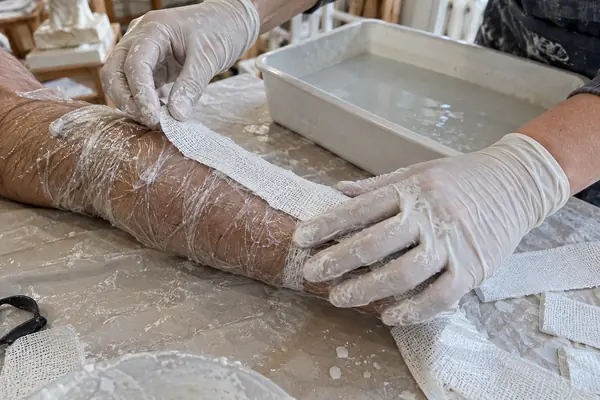
NSEAD calls casting any body part in plaster potentially very dangerous and says never to submerge hands in liquid plaster. It names an alginate mould as the safest way to take an impression.
Yes. NSEAD says warm or hot water accelerates hardening. A lab study of plaster bandage casts found 40 °C dip water gave peaks 2 to 4 °C hotter than 24 °C water.
No. NSEAD warns that wet plaster poured down a sink will set and block it. Put plaster fragments in a rubbish bag and wipe or scrape surfaces clean.
Updated
ABOUT THIS NAME
doodlecasting.com is part of the DoodleSale portfolio. It isn't in an auction right now, but you can ask about leasing it.